Obstructive sleep apnea causes repeated airway collapse during sleep, disrupting rest and straining your heart and brain. At Macleod Dental, we provide custom mandibular advancement devices (MADs) — a clinically proven, comfortable alternative to CPAP for mild-to-moderate sleep apnea.
Obstructive sleep apnea (OSA) occurs when the muscles at the back of the throat relax during sleep, causing the airway to collapse repeatedly throughout the night. Each episode briefly wakes the brain to restore breathing — often hundreds of times — robbing you of deep, restorative sleep and placing serious strain on your cardiovascular system.
The airway collapses during sleep, causing breathing to stop repeatedly. The brain partially wakes to restore breathing, disrupting sleep architecture.
Untreated sleep apnea significantly raises the risk of high blood pressure, heart disease, stroke, type 2 diabetes, and cognitive decline.
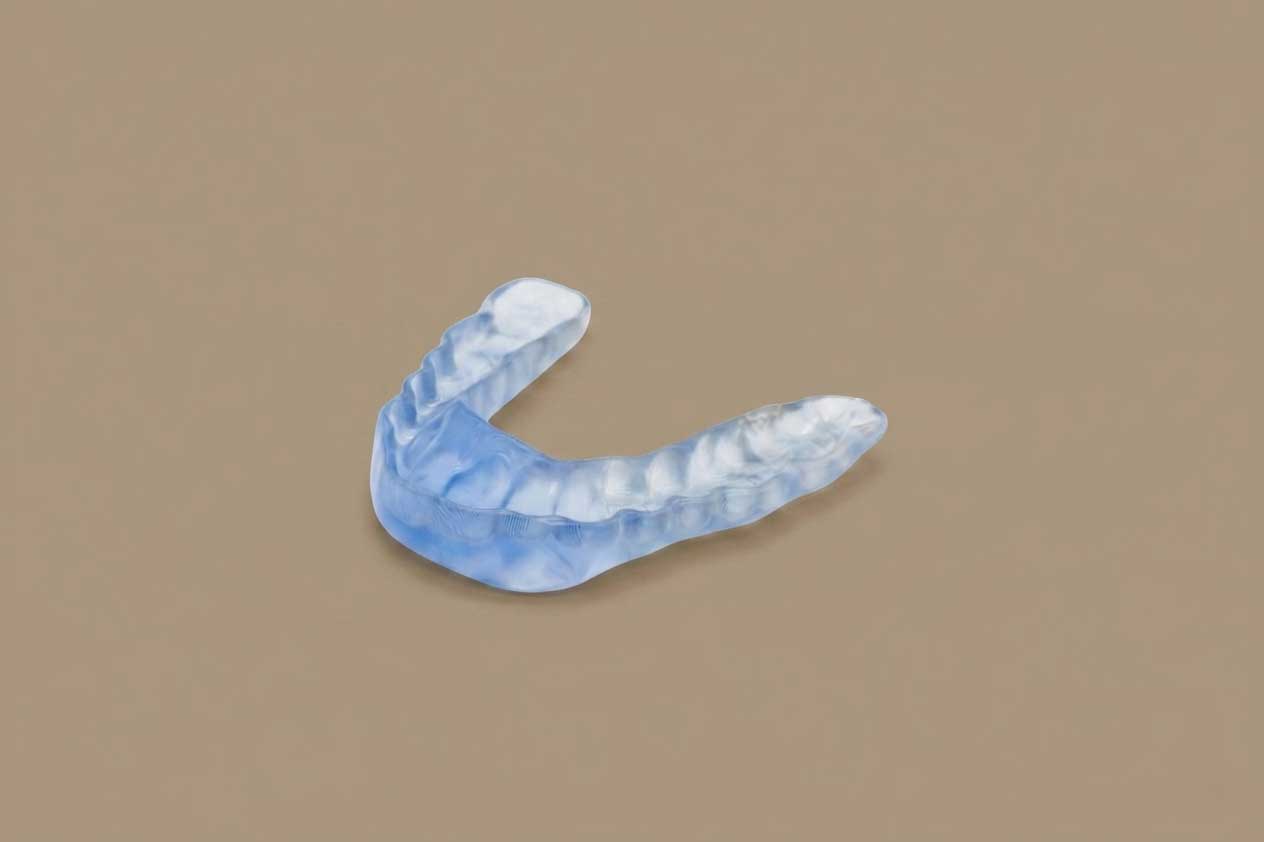
A custom mandibular advancement device (MAD) gently repositions your lower jaw forward during sleep, keeping the airway open without masks or machines.
Is an Oral Device Right for You?
Snore loudly and persistently
Loud, frequent snoring is one of the most common signs of obstructed airflow during sleep.
Wake unrefreshed despite a full night's sleep
Fragmented sleep from repeated apnea events prevents deep, restorative rest.
Experience morning headaches or dry mouth
Common symptoms caused by repeated oxygen disruption and mouth breathing during the night.
Have been told you stop breathing during sleep
Witnessed pauses in breathing by a partner are a strong indicator of obstructive sleep apnea.
Experience daytime fatigue or brain fog
Poor sleep quality affects concentration, mood, and energy throughout the day.
A formal diagnosis requires a sleep study. We work closely with your GP and sleep physicians and can guide you through the referral process.
Why choose a dental sleep device?
Small, discreet, and easy to travel with — no machine or power required
No CPAP mask, tubes, or noise — ideal for those who cannot tolerate CPAP
Custom-fitted to your teeth for maximum comfort and effectiveness
Clinically proven to reduce apnea events and improve sleep quality
Significantly reduces snoring — improving sleep for partners too
Note: a formal sleep apnea diagnosis is required before we can fit an oral device. We can help coordinate this with your GP or sleep specialist.
Getting a custom oral sleep device is a straightforward process. Here’s exactly what to expect from start to finish.
Step 01
We discuss your symptoms, sleep history, and assess your teeth and jaw suitability for an oral device.
Step 02
If not already diagnosed, we coordinate a referral to your GP or a sleep specialist for a formal sleep study.
Step 03
Precise impressions of your teeth are taken and sent to the lab. Your MAD is custom-fabricated to fit your mouth exactly.
Step 04
Your device is fitted and calibrated to position your jaw at the optimal advancement for airway opening and comfort.
Step 05
Follow-up appointments ensure the device is working effectively. We monitor jaw comfort and adjust advancement as needed.
There is no one-size-fits-all answer — the right treatment depends on the severity of your apnea and your lifestyle. Here is an honest comparison.
| Feature | Oral Device (MAD) | CPAP Machine | Positional Therapy | Surgery |
|---|---|---|---|---|
| No mask or machine | ✓ Yes | ✗ No | ✓ Yes | ✓ Yes |
| Suitable for mild–moderate OSA | ✓ Yes | ✓ Yes | Mild only | Selected cases |
| Easy to travel with | ✓ Yes | Difficult | ✓ Yes | ✓ Yes |
| High patient compliance | ✓ Yes | Often poor | Variable | N/A |
| Invasiveness | Non-invasive | Non-invasive | Non-invasive | Surgical |
Severe sleep apnea typically requires CPAP as first-line treatment. We will always work collaboratively with your sleep physician.
A mandibular advancement device (MAD) works by holding your lower jaw slightly forward during sleep. This gentle repositioning tightens the soft tissues and muscles at the back of the throat, preventing the airway from collapsing and reducing or eliminating apnea events and snoring.
Most patients find their custom-fitted device comfortable after a short adjustment period. Because it is precision-made from impressions of your teeth, it fits snugly and securely. Off-the-shelf devices are far less comfortable and less effective — a custom device is a significant upgrade in both fit and outcome.
Yes — a formal sleep study (polysomnography or a home sleep test) is required to diagnose sleep apnea and determine its severity before we can provide an oral device. This is an important safety step, as severe sleep apnea typically requires CPAP as first-line treatment. We can help coordinate the referral process with your GP.
Over-the-counter devices are generic, one-size-fits-all products that offer limited effectiveness and poor fit. A custom dental device is precision-made from impressions of your teeth, calibrated to your specific jaw advancement requirement, and adjusted over time for optimal results. It is a medical-grade appliance, not a consumer product.
Many private health fund extras policies provide a benefit towards custom oral sleep devices under major dental. The amount varies by fund and level of cover. We recommend checking with your insurer and can provide a written treatment estimate so you can confirm your entitlements before proceeding.
Most patients adapt within two to four weeks. Initial side effects such as mild jaw soreness or excess saliva are common and typically settle quickly. We schedule follow-up appointments to check comfort, adjust the advancement, and ensure the device is performing as expected.
Sleep apnea and TMJ disorders often co-exist. Oral devices can address both conditions.
Comprehensive dental rehabilitation that restores bite, function, and overall oral health.
Regular dental maintenance keeps your teeth and gums healthy alongside your sleep device care.
Missing teeth can affect jaw alignment and airway — part of the broader picture of dental health.
Ready to sleep better?
Book a consultation at Macleod Dental and we’ll assess whether an oral sleep device is right for you — with honest advice, clear next steps, and no pressure.